In 9 out of 10 cases, digital marketing can be simplified into three simple processes: inbound marketing, lead nurturing, and digital sales campaigns.
If you implement all three effectively, you will be able to scale up to a level you never thought possible, reach more customers than ever before, and see a significant impact on your sales. You will also have more time to focus on new ideas and strategic issues instead of constantly fighting fires and trying to meet stressful deadlines.
Read on and I will walk you through the processes one by one, showing you exactly how you can implement them today.
Digital marketing process 1: Inbound marketing (and sales)
Inbound marketing is about creating sales funnels that start online and end with a purchase. These sales funnels consist of the following steps:
- Get found: Understand what your customers are searching for and write content that attracts visitors.
- Convert: Convert your visitors into leads by offering something interesting in return
- Sales: Create processes for selling to these leads – with the help of both the marketing and sales departments.
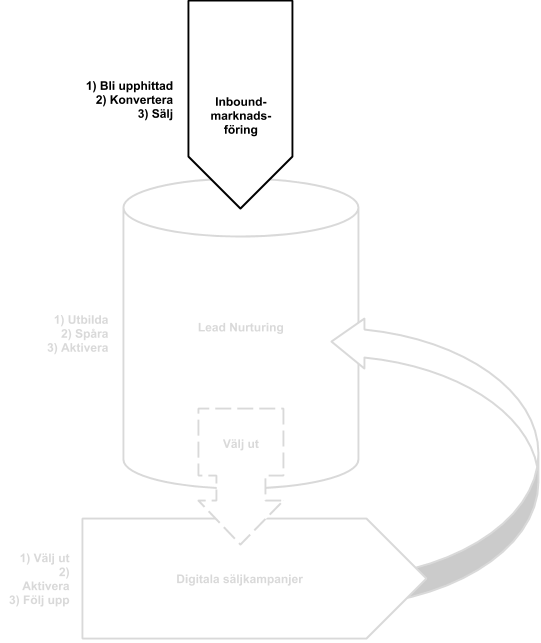
With smart marketing, you can talk to people at every stage in the best possible way: Get found by talking about their everyday problems (most commonly on your own blog and through social media marketing), convert by providing new insights, and sell by talking about yourself, your services, and your products.
Digital marketing process 2: Lead nurturing
Lead nurturing is important because most of the leads you get from inbound marketing will not buy immediately. Most will drop out somewhere in the sales process.
You will also need to engage with those who actually buy. And those who will never buy but are still valuable (e.g., potential partners, opinion leaders, even potential employees).
That's why you need a process that allows a lead to jump out of the buying cycle, be processed, and jump back into the buying cycle when it's ready.
A good lead nurturing process does just that. It educates leads who drop out of the buying process, keeps them warm, educates them, and enables them to jump right back into the buying process when they are ready.
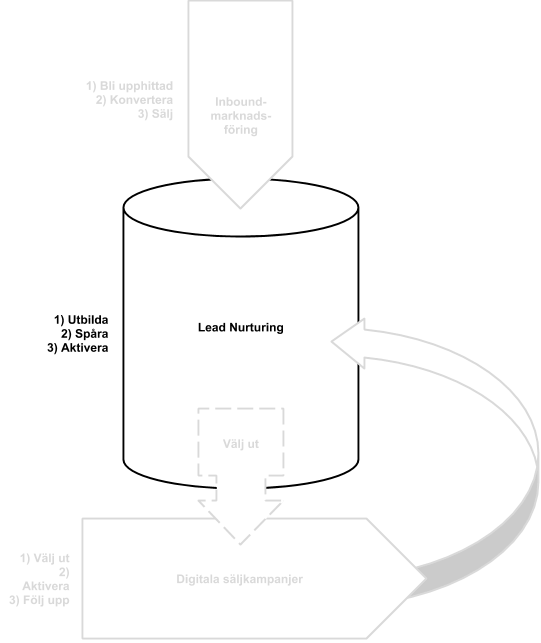
A good nurturing process includes the following components:
- Collection: Both those who drop out of a purchasing process and those who are naturally curious about more content from you.
- Segmentation: So you can write different things to different groups
- Follow-up: Usually via email, but also via other channels (e.g., social media and retargeting) and preferably with the same message regardless of where they are.
- Tracking: So you can see when it's time to move the lead into a new sales process
Digital marketing process 3: Digital sales campaigns
Digital sales campaigns become more important the more contacts your inbound marketing generates.
While lead nurturing is reactive and "waits" for a lead to become ready, digital sales campaigns are more proactive.
Here, you select a group (if you have a good marketing automation system, you can do this dynamically based on both interests and actions) and create a campaign to sell something to this target group.
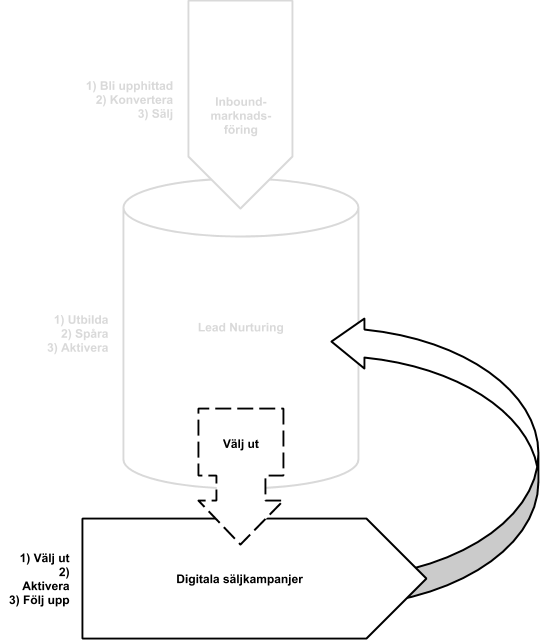
"Selling" can also mean, for example, promoting an event or registering interest in something. Some of the most common examples of what digital sales campaigns can involve are:
- Invitation to event
- Invitation to webinars
- Temporary discounts or product offers
- Early access
- Opportunity to participate in beta testing
- Request for feedback or surveys
Most companies do not have the capacity to do all of these well. The 80/20 rule usually applies. One or two of the above types of digital sales campaigns will account for the majority of the engagement you will get. That is why measurement is so important.
So try out a few that you believe in and measure both the cost and the results. Once you've found one that works, forget all the others. Focus on standardizing, systematizing, and scaling up the one that worked!
One Swedish company that has been extremely successful in this regard is Hypergene, a client I have worked with. They have really found their niche with regular webinars. They have standardized how the webinars are created, how contacts are invited, and how they are followed up.
Thanks to this focus, they manage to hold several professional and interesting webinars every month. They always have many enthusiastic participants. And this clearly has a major impact on sales. Very impressive!
How all digital marketing processes are connected
Inbound marketing generates leads. Lead nurturing educates and keeps your leads warm until they are ready to buy. And digital sales campaigns bring those who are ready to buy back into the sales process.
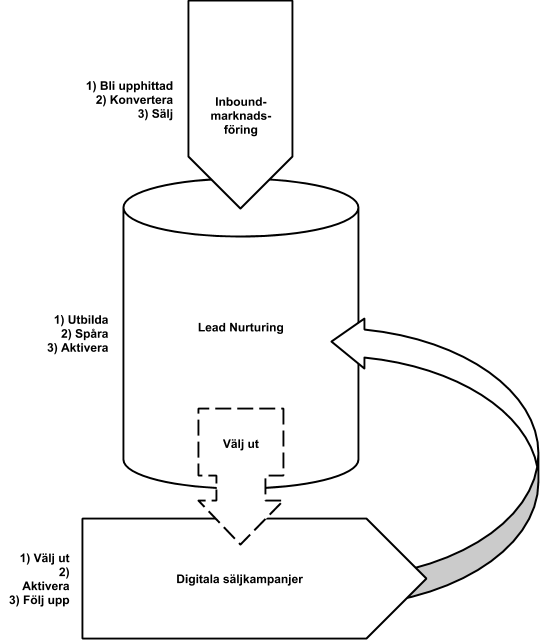
If you want good results, you have to do all three. On their own, the processes are quite weak.
If you only do inbound marketing, for example, you will get many leads, but 95% of your leads will be lost. This is because very few leads will go through your purchasing process from start to finish in one go.
Lead nurturing only works if you have a digital sales process that hot leads can jump back into.
And digital sales campaigns don't work if you don't have a large database to begin with.
It takes a lot of effort to build up all three of these processes at once. My recommendation is to do it in this order:
- Start by creating theinbound marketing process: This is the foundation that must be in place for the other two to work, and it delivers good results in itself.
- Once you start getting leads regularly, shift your focus tolead nurturing: This ensures that the majority of the leads you get are not lost.
- Once you have built up a database large enough to make it worthwhile trying to sell directly to them, select thetypes of digital sales campaigns you believe in most and test which ones work best.
It takes time. But when you're done, you'll have a world-class marketing machine. It will pay for itself many times over. And you'll have both the time and energy to focus on growth, new ideas, and more strategic issues.