What is a marketing automation funnel?
When you want answers today, you go to Google. From CXOs at global companies to employees at the bottom of the hierarchy.
If you understand your customers' searches, you can create customized Marketing Automation Funnels to capture and sell to these individuals.
How do you do this? Read more.
Step 1: Attract your target audience
First, we need to make sure that those searches lead to us. And you do that by blogging. But don't just blog for the sake of blogging; blog with a purpose.
Write regular blog posts that address questions your target audience asks Google. This will attract potential customers who don't know they are potential customers. Link between blog posts to guide visitors in the right direction (as I did there). In this way, create a network of blog posts that capture visitors to your marketing automation system:
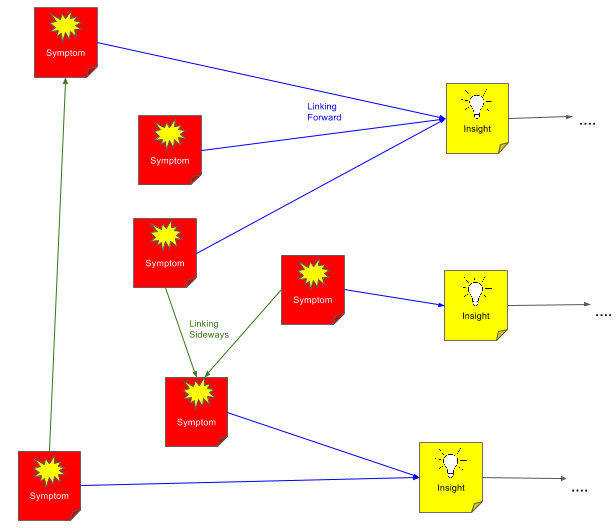
Exactly how to do this is described in more detail in the articleHow to blog to generate traffic and leads. (See – I did it again! 🙂 )
Step 2: Capture visitors in your marketing automation flow
Then capture visitors in automatic sales flows that you have built with your marketing automation system. Offer them solutions to the problems they were searching for, in exchange for their email addresses. You can do this on a landing page that contains a form:
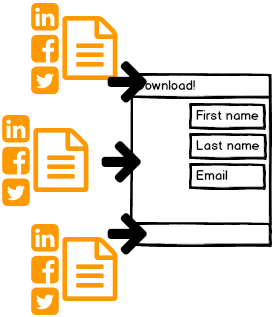
Once you have captured them, it is time to educate them—give them insights so that they understand the problems in a new way.
Step 3: Provide your leads with insights into their problems
Create more material around the insights you want to educate your leads about. Not about your product, but about their original problems. This could be related videos, articles, blog posts, or other content you can come up with. Email these insights to your target audience bit by bit over time.
But make sure your material opens their eyes. Don't just solve their problems, show them the problems from a new perspective. A perspective they haven't thought of before. This is what smart marketing does: it captures customers who think they have problem A, but shows them that they actually have problem B.
If you have interesting content with valuable insights, you will gain a following. And when they begin to see their problems from your perspective, you will have eliminated potential competitors.
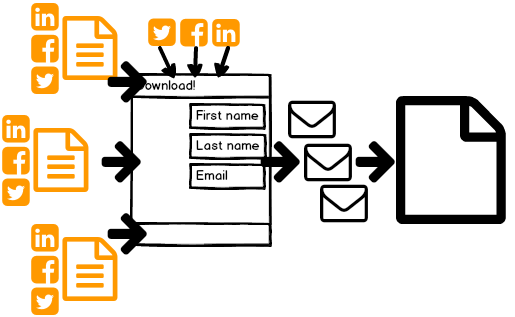
Now it's time for the final step in your sales flow: Selling!
Step 4: Sell with your funnel
In every email, you urge them to take action. Ask them to click on a link at the bottom to see how your products solve their problems. Because that is the ultimate goal of all marketing: to sell.
If it's a potential customer, they're ready, and your material has been interesting, they'll click.
What you link to is no longer educational. Now you can start selling for real. What they click on is now traditional, product-based content that positions you as the best supplier. But because they have the right mindset, the material becomes so much more effective.
Once they have read this, your marketing automation system notifies your salespeople so they can get in touch and close the deal. The entire flow, from start to finish, now looks like this:
Leads that have gone through this flow will be more open to dialogue, interested in meeting, and have much shorter sales cycles because they already see the world the way you do.
What do we do with the leads we couldn't sell to?
Your marketing automation funnels will undoubtedly capture a lot of leads that are not potential customers. But they are also valuable!
Create your funnels in such a way that they are placed in a special category that you can call your "fan club."
If you happen to capture competitors, you can use automations to exclude them from future mailings.
You can process partners using special partner flows.
You can engage promoters with news and insights over time, so that they spread your message further.
And potential customers who weren't ready right now, you continue to nurture with interesting insights. Every now and then, you encourage them to take action. When they're ready, they do, and your marketing automation system lets you know it's time to reach out.
How much additional sales can your marketing automation funnels generate?
How many leads can you get? How many of these can turn into business?
Generally speaking, there is one rule: the more expensive the product, the fewer leads. But the end result in terms ofmoney is always roughly the same.
But to answer the question, let's take a look at a company I helped, which sold IT solutions with order values ranging from hundreds of thousands of kronor to several million. Here are their figures:
They receive an average of 22 visitors per month and blog post. This is the number of visits blog posts receive today, even though they were written and published several years ago.
On average, 1.5% of visitors convert to leads via the initialeducational offer . From there, approximately 10% convert to sales-ready leads.
In other words: 10 blog posts give this company 10 x 22 x 1.5% x 10% = 0.3 sales-ready leads per month. With a closing rate of 20% (not unusual with such qualified leads) and an order value of SEK 500,000, this amounts to SEK 30,000 per month.
If you blog once a week, you will have 50 blog posts after a year: $15,000 per month. By blogging once a week. An employee can blog three times a week and costs less. A clear ROI.
If you focus on building sales funnels, soon the question will no longer be "how can we get more leads?" but rather "how can we streamline the management of all the leads we get?" I've seen it happen. We had to hire dedicated salespeople who only handled our 70 leads per month.
And the answer will be the same answer that led us here in the first place: By using marketing automation to help salespeople become even more effective!